Register for LOOP

Get your copy of LOOP by registering for FREE! Go

Find a school/club

Book Flying Lesson

Click Here Go

Buy an aircraft

Click Here Go

Sell an aircraft

Click Here Go
Explore

LOOP News

nil

9 OCT 07: SERVICES AHEAD!

SERVICES AHEAD!
The CAA reviews traffic information for pilots

A HAZY area of knowledge for many GA pilots is the use of Air Traffic Services Outside Controlled Airspace (ATSOCAS). This is a pity, as we spend most of our time flying outside controlled airspace (Class F and G airspace) and it would be nice to know what services are available.
In fairness, confusion regarding ATSOCAS is not entirely the pilot's fault. Over the years, different interpretations of the services have developed throughout the UK between - and even within - civilian and military ATC.

For example, get a 'Flight Information Service' (FIS) from London FIS on 124.6, and you will probably get just that - information for your flight such as weather and regional pressure settings, etc, but no traffic information.

Request the same service from Norwich or Farnborough ATC, and you may well get a pseudo-Radar Information Service (colloquially known as FRISing) and receive information on other flights. Now this is useful, but it can cause confusion.

With this in mind, the CAA has initiated a review to standardise and clarify matters.
The review of ATSOCAS, known as the Airspace and Safety Initiative (ASI), is part of a wider scheme between the CAA, National Air Traffic Services (NATS) and the Ministry of Defence (MOD). ASI receives inputs from all areas of aviation to identify areas of safety concern within UK airspace, and its website should become the major portal for airspace information.

A consultation process is now open, and views are invited from all. It ends on December 14, 2007, and the new procedures should come into effect in April 2008.

Comments may be emailed or posted to the CAA. Now PLEASE don't make comments to the CAA based on this article alone - you need to read all the information to understand the history and rationale for these changes. I am just scratching the surface here.

One of the aims of the changes is to reduce the confusion surrounding the titles of the various air traffic services. The new services will be used by both civilian and military units, who will have a common songsheet to work from, known as CAP774. 

Briefly, then, I will outline the new suite of procedures that should be introduced next April. All of them are there to help pilots maintain the 'see and avoid' principle.

BASIC SERVICE
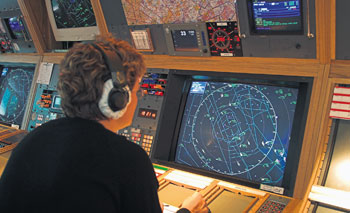
The Basic Service will be most akin to the current FIS, in that you will receive basic generic information for your flight, eg 'Gliding at Tibenham', 'Danger Area 139 active to 1000ft'. The controller could have radar, and may give you warnings of traffic posing a definite hazard, but without any deconfliction advice. The routine calling of traffic under the Basic Service will be discouraged to avoid the risk of 'FRIS'. The pilot is expected to operate safely without controller assistance.

TRAFFIC SERVICE
The next level is the Traffic Service, which will help the pilot to see conflicting traffic.
 A controller will give specific traffic information, which will be updated if it remains a hazard. Again, no deconfliction advice will be given. ATC may also provide heading and level allocations for positioning and sequencing.

DECONFLICTION SERVICE
The Deconfliction Service is the highest level of surveillance (or radar) service. You have to accept heading and level allocations given by ATC, and traffic information will be given along with deconfliction advice. This is really designed for IFR flights, and the controller will aim to achieve deconfliction distances where possible.

PROCEDURAL SERVICE
The Procedural Service is likely to be of least relevance to the PPL. The service will work primarily with Advisory Routes (ADRs, which are Class F airspace) and generally without surveillance. The controller will provide traffic advice based on pilots' procedural position and level reports.

The above is just a broad outline of the new services, but it's worth noting that while Traffic and Deconfliction Services must have radar surveillance, Basic and Procedural Services may use radar. In requesting any service you are establishing a contract with the controller, which you can renegotiate if circumstances change. A controller may also ask you to agree to accept temporary instructions to assist pilots receiving higher level services.
Remember, this is still at the consultation stage, so don't start using it yet!

ATSOCAS Consultation
W: www.caa.co.uk/consultations

Airspace & Safety Initiative
W: www.airspacesafety.com
 

News calendar
<October 2007>
SunMonTueWedThuFriSat
123456
78910111213
14151617181920
21222324252627
28293031
Partners
Aerobatics
Aeros with Alan – Opening your Personal Flight Envelope
Learning aerobatics is a great motivational tool for improving your flying.
Features
Learn to fly
So you want to learn to fly? What do you do? Take a look at our guide to get you airborne.
Find a school/club

Want to learn how to fly?
Click on the map above to find your nearest flight training school.

News
GA businesses given 30 days to move outSOUTH coast airfield Lee-on-Solent is facing closure to General Aviation. All aviat ... more
AIRFIELD licensing costs will rise 65-88% next year under the latest scheme of charges proposed by the CAA.The steep hike is ... more
Maiden flight for new Italian light twin powered by RotaxA BRAND new light twin aircraft being developed by Italian manufa ... more
All material © LOOP Publishing (UK) Ltd 2005-2007