|
|
|
Register for LOOPGet your copy of LOOP by registering for FREE! | Find a school/club | Book Flying Lesson
| Buy an aircraft
| Sell an aircraft
| ||||
LOOP News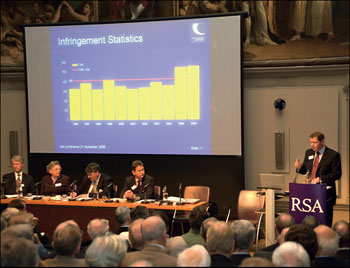 1 DEC 06: *NEWS SPECIAL* CAA GA CONFERENCEThe CAA had given in to pressure from the airlines to increase fees and charges to GA, a move which brought to a head many simmering resentments over the way the Authority operates. Something had to be done. The Chairman of the CAA, Sir Roy McNulty, instigated two Reviews of the way the CAA works with General Aviation. One was called the GA Strategic Review which looked at the overall health of GA, the other was the GA Regulatory Review and looked at the detail of how the CAA worked closely with the industry (a term which also covers recreational flying). Both Reviews published reports last summer with recommendations for the future. Both reports were accepted in full by the Board of the CAA. In addition to these Reviews - which involved representatives of all participants in flying, from gliding and microlights up to business jets - further controversy has been stirred up by the proposal to introduce compulsory Mode S transponders, the possible ban on UK-based N-reg aircraft, and the growing impact of the European Aviation Safety Agency. All in all, it's been a tempestuous time for GA. In the new-found spirit of cooperation and consultation then, it was a good move by the CAA to stage a special General Aviation Conference in November. It was held on neutral territory at the Royal Society of Arts in London, in a glass-domed lecture room known as 'The Great Room', surrounded on all four walls by James Barry's painting, The Progress of Human Knowledge. Was there any progress? LOOP Editor Dave Calderwood was there to report. CHAIRMAN'S INTRO
SIZE MATTERS FIRST session of the day was kicked off by Alex Plant, who headed up the GA Strategic Review. One of the most important things to come out of his Review was the realisation of how diverse GA is - "a surprise to us all" - and the size of the sector - "bigger than expected". A figure of £1.4 billion has been put on the value of GA's contribution to the UK economy, roughly 8% of the total aviation sector (the rest being Commercial Air Traffic), with around 11,500 direct employees. Plant highlighted the two growth "ends" of GA - microlights and business aviation - and said the rest was down or flat at best. The Review highlighted several key issues: * Planning - there's no recognition of the value of a national network of accessible GA airfields * Foreign-registered aircraft - growth here suggests "regulatory shopping" is going on by aircraft operators * Concern over the difficulty of gaining an Instrument Rating * GA needs to organise itself better to put its case more effectively. This last point was reiterated several times during the day, particularly by CAA and Department for Transport officials. A "single point of contact" was required, who could pass on information and coordinate responses. All 18 recommendations in the GA Strategic Review report were accepted by the CAA and were being acted on. Plant explained how a new body, the General Aviation Strategic Forum, would start meeting in early 2007 to start implementing the actions. Some early 'wins': * The government is to consider a policy statement on the value of maintaining the network of airfields - something that would aid airfield operators to gain planning permission to upgrade facilities * The government is also to consider removing VAT on flight training. "It's out of kilter with other training in the economy," said Plant. LOGGING THE ISSUES DAVID Chapman was Plant's counterpart on the GA Regulatory Review. He said the 19 recommendations in the report would be taken up by a revised General Aviation Consultative Committee. The GACC's next meeting was the following day and it had created a permanent Issues Log to deal with other items that came up - 23 so far. The GACC would have its own website with minutes of meetings, the Issues Log, and updates on where they are. One of the most important recommendations was about further devolution of the management of non-EASA aircraft (microlights, homebuilds etc), to the relevant associations. LESS IS MORE LIGHTER regulation was taken up by David Roberts, a member of the Review team and a past chairman of the British Gliding Association. "Most aspects of gliding have not been state regulated until the advent of EASA," he said. "Airspace, Rules of the Air, and Radiotelephony are the only state regulations affecting gliding. So why has a whole industry grown up to regulate GA, particularly the lighter end?" Safety regulation needs to be measured against fatal accident rates, he said. "The breadth of GA requires different approaches for different sectors. One size does not fit all." During a Q&A session after this, Ann Godfrey of the DfT said, "The UK is unique in regulating on a risk basis [within Europe]. EASA gets it but other member states don't like it." AIRSPACE ASSAULT "THERE are 28 masterplans for airfields," said Phil Roberts of the CAA Directorate of Airspace Policy. "If all were implemented, the airspace couldn't handle it all." Growth in Commercial Air Traffic is huge - up from 2.3 million flights per year now to 3.2 million by 2015. The Directorate is handling the largest list of proposed airspace changes it's ever had, with requests for Class D zones, CTAs and modifications to Airways. Changes are coming from Europe too. Infringements are up, partly because of increased reporting by NATS. Figures for 2006 to date are 523 reports compared with 341 for the same period two years ago. Most involve GA aircraft, with Class D being the most commonly busted airspace. The good news is that GA will be consulted and considered more in the future when airspace changes are proposed. "We expect the proposer to show how GA will have access to that airspace," said Roberts. The CAA will also be following up after the changes to see what's actually happening, ie how requests for clearances are handled. Among a raft of initiatives is better education for pilots about using airspace, including a new 'crib' sheet to improve R/T when asking for a clearance. Roberts also made a plea for pilots to use technology such as Mode C transponders - "if you've got it, use it." MODE S MUDDLE WHICH led neatly into the most contentious issue of the day, Mode S and its proposed mandatory use in the UK. Simon Wragg, a serving RAF officer seconded to the CAA, took the flak. He opened with the 'key message' that "Mode S is required" and then spent the next 20 minutes trying to convince a sceptical audience that no decision has been made yet. Various processes are being worked through by the CAA, but when the "doing nothing is not an option" argument was put forward, it did seem that Mode S is inevitable and that all the talk was just window-dressing. However, the current implementation date of March 2008 seems likely to be put back given the level of analysis still be processed. AIRFIELD ANGST FLIGHT training for the PPL at unlicensed airfields should be allowed - that's one of the recommendations of the Light Aviation Airports Study Group (LAASG) which reported in January 2006. The CAA said wider consultation was necessary before going ahead with instigating that change, and the results of that consultation are now being analysed, said Graham Forbes of the CAA, who headed the Group. The responses are overwhelmingly positive and this will now lead to an assessment of the issues raised. Janet Hoare, who was also a member of LAASG and who, like Forbes, has been directly involved in the operation of an airfield, said the UK was "out on a limb" on this subject. "Europe, the USA and Australia all allow training from unlicensed airfields," she said. EUROPE CALLING ONE of the biggest successes of 2006 was heading off a 40% rise in fees and charges from EASA, said Mark Wilson of the British Business and General Aviation Association (BBGA). But there are still long term budget problems within EASA, with costs too high and if passed on directly, will start to hit the cost-effectiveness of Europe as an aviation base. The BBGA is also pushing for standardisation across all EASA member states - "there's not much point to EASA unless it can achieve this," said Wilson. Similarly, "proportionality - what's applicable to British Airways and Airbus is not necessarily right for a SME business". New maintenance regimes for aircraft are due to come in from 28 September 2008. EASA is "trying to drive everyone into a controlled environment," said Bill Taylor, whose job as boss of de Havilland Support has led him into the maze that is known as Part M. "If you're in the uncontrolled environment, you pick up effectively a Star Annual every year rather than every third year. It will affect every aircraft owner and operator." There are still lots of unknowns and unresolved issues with the Part M, however. Not least is what happens as a result of discussions on the future of aircraft classes - "We don't want to implement it [Part M] on 28 September 2008 then have to re-do it all 18 months later," said Taylor.
"There is now a real level of understanding of General Aviation at the heart of government, and a real desire to work with you to ensure the sector can move on in the way it wants and needs." The Minister's full speech can be seen on the DfT website: http://www.dft.gov.uk/stellent/groups/dft_aviation/documents/page/dft_aviation_613670.hcsp ONE-LINERS ROGER Hopkinson of the General Aviation Alliance, a body which came together to represent all sides of GA, said GA needed to thrive as a "national social and economic activity", pointing out that GA manufacturing within Europe was up 40% year on year but the UK's share of that was minimal. ANN Godfrey, of the Dept for Transport, emphasised the need for a focal point within GA, through which govt could source a response and disseminate information. "It's not rocket science," she said. "It happens in other industries." "WE now have the engagement of NATS at a high level," said Phil Roberts of the Airspace Directorate when answering a question about getting clearances through Class D zones. "That's not really happened before." THE CAA is looking at providing its charts electronically - after it has resolved issues such as copyright of the base maps with the Ordnance Survey. This would make it easier to maintain up to date charts. "WE don't slavishly follow what the FAA does," said Phil Roberts. "They're not always right." That was in response to a question about why we're going down the Mode S route rather than ADS-B, a similar but not quite the same technology. The fact that ADS-B does not activate Traffic Collision Awareness Systems is one reason. "A YEAR ago EASA had real problems," said Mike Smethers, the CAA's man on European and International Strategy. Things are better now, it seems. "There's a growing emphasis on partnerships with NAAs," he said. "EASA increasingly realises it has to be a customer-led service." Click below for further reading: THE CAA's press release on the GA Conference Strategic Review of General Aviation Regulatory Review of General Aviation CAA Consultations |                      | |||||||
 Aeros with Alan – Opening your Personal Flight Envelope Learning aerobatics is a great motivational tool for improving your flying. |  Learn to fly So you want to learn to fly? What do you do? Take a look at our guide to get you airborne. | 
Want to learn how to fly? |
Mangold wins championship after tie on points in finalePAUL Bonhomme came so close to becoming the 2007 Red Bull Air Rac ... more
ECLIPSE and Cessna are engaged in a 'who's fastest' race with their respective EA500 and Mustang Very Light Jets. Both com ... more
HISTORY was made on 2 October when an L-29 ex-military aircraft completed the world's first jet flight powered solely by 1 ... more | |||||
| All material © LOOP Publishing (UK) Ltd 2005-2007 |