Register for LOOP

Get your copy of LOOP by registering for FREE! Go

Find a school/club

Book Flying Lesson

Click Here Go

Buy an aircraft

Click Here Go

Sell an aircraft

Click Here Go
Explore

LOOP Features

nil

No dodgy check Please - Learners Corner

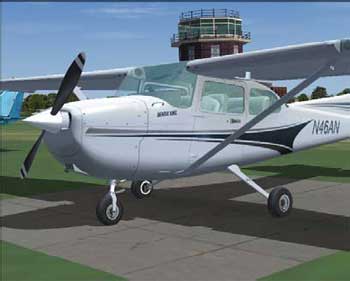
WHEN you start learning to fly, one of the first things your instructor will do is to give you a checklist for the aircraft type. He will also encourage you to spend time familiarising yourself with the inside and outside of the aircraft.

At first sight, you may consider the checks to be a little OTT as many of them are so obvious and unlikely to change from one flight to the next. Consider this: flying is a very disciplined business which you have to understand in depth if you are going to make the grade.

Initially, flying discipline will be imposed upon you, via your instructor, by the use of standardised checks and procedures. As you become more proficient, self-discipline will take over but the checklist will still be an essential part of your flying kit.
 
MEMORY OR CHECKLIST?
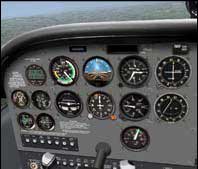
Should the pilot memorise the checks or use the checklist? Do both. When the aircraft is on the ground you have the time. Use the checklist. In the air certain checks should be memorised, eg circuit, emergencies etc.

The Air Navigation Order (ANO) requires the pilot-in-command of an aircraft to satisfy himself before takeoff that the aircraft is fit in every way for the intended flight. Operating against the advice of the ANO should not be taken lightly. So here is a very good reason to stick rigidly to the checklist and give yourself plenty of time to complete everything.

The Pre-flight check (also known as the A check) can be a lifesaver and this is no time to take risks.
With practice, internal and engine start checks can be completed quickly and accurately. You are not checking the cockpit for build quality, but you are looking for anything that will impact on the flight, eg unserviceable radios, nav aids, instruments etc. It's up to you to decide if you can carry the unserviceability. Don't be pressed into making a bad decision.

As you become familiar with your aircraft, whether you own it or borrow it, get to know how it sounds and feels, and treat it with respect. Power checks should never be performed until the engine has warmed up (oil temp) as this can be very damaging.

Five minutes warm-up is a good ballpark figure, usually achieved during taxiing, although some aircraft types quote longer periods and specify oil temperatures. Again, this is not a time to be rushing your checks.

CAN YOU VARY THE PRINTED ACTIONS? 
Let me give an example. Takeoff preparations for the PA-28 Cherokee are a bit vague and do not specifically tell you to use flap. But a heavy aircraft taking off uphill on a short runway on a hot day with little wind on the nose could do with some help - flap. So let commonsense play a part in your takeoff and increase your margins. You are unlikely to be challenged for demonstrating flight safety and airmanship awareness.

FREDA
Up to this point, we have been using the checklist because there has been time and no pressure. Things can change dramatically when you are airborne. Routine FREDA checks should be easily remembered. Pre-stall and manoeuvre checks again rely on acronyms to trigger your actions. But, when something goes wrong your actions must be immediate and instinctive to counter and control the situation. Only then, if time and the situation permits, should you refer to the checklist to make sure you have covered everything.

Recovery and landing should be a relaxed time, particularly when you have the airfield in sight. But don't relax too much until you are on the ground and have cleared the runway.
Joining checks and those around the circuit are best committed to memory as most of your attention should be outside the cockpit. This is the time when airmanship and flight safety should feature prominently in your thinking and planning, neither of which appears in any checklist.

Over the years I have used many checklists from advanced military to basic civilian ones. They all have one thing in common. The ground checks are comprehensive and detailed, the air checks are succinct and easily read. If you want to reinvent the checklist for your own aircraft in a way which is more user-friendly, this is not a sin, providing everything is covered. What is wrong is the selective use of some checks believing they are the ones that matter.

SUMMARY
Look at checks as a discipline which must be mastered to be fully in control of your aircraft. Make use of the checklist the norm, rather than just when someone is watching you.
Any checklist is better than none at all. In reality there is little difference between most basic aircraft and the checks required to get them going.


In the air, use a mnemonic aid such as
FREDA to remember  Checks


Fuel, on the correct tank and sufficient...


Radio, on the right frequency...


Direction, check compass against the DI.


Consider the checklist to be as essential as an up-to-date map, but when using it try to avoid embellishments. An early military student of mine always had his fuel, 'sufficient for the task in hand and adequately distributed' (contents checked and balanced). More recently, I had a mature gent who when strapped in would say 'up mine and up yours'. It later dawned on me it was the aileron check.
Checklists won't necessarily make you a better handling pilot. But adherence to the written word will make you more competent and, hopefully a safer person to share the airspace with.

WORDS Gerry Honey ILLUSTRATION Nick Churchill/Horizon Simulation

News calendar
<October 2007>
SunMonTueWedThuFriSat
123456
78910111213
14151617181920
21222324252627
28293031
Partners
Aerobatics
Aeros with Alan – Opening your Personal Flight Envelope
Learning aerobatics is a great motivational tool for improving your flying.
Features
Learn to fly
So you want to learn to fly? What do you do? Take a look at our guide to get you airborne.
Find a school/club

Want to learn how to fly?
Click on the map above to find your nearest flight training school.

News
AIRFIELD licensing costs will rise 65-88% next year under the latest scheme of charges proposed by the CAA.The steep hike is ... more
Maiden flight for new Italian light twin powered by RotaxA BRAND new light twin aircraft being developed by Italian manufa ... more
CESSNA has confirmed it is negotiating to buy Columbia Aircraft. Columbia ran into financial difficulties and filed for Ch ... more
All material © LOOP Publishing (UK) Ltd 2005-2007