Register for LOOP

Get your copy of LOOP by registering for FREE! Go

Find a school/club

Book Flying Lesson

Click Here Go

Buy an aircraft

Click Here Go

Sell an aircraft

Click Here Go
Explore

LOOP Features

CAP 10C
CAP 10C

Super Decatlon v CAP 10C

DOUBLE ACT
Two Aerobatic aircraft capable of touring go head to head: American Champion  Super Decathlon v CAP 10C

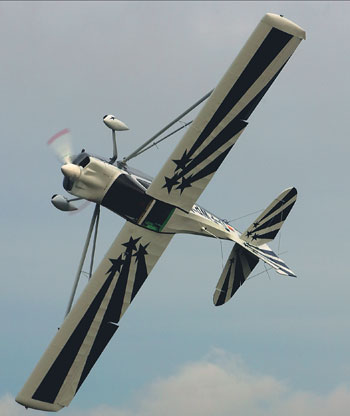
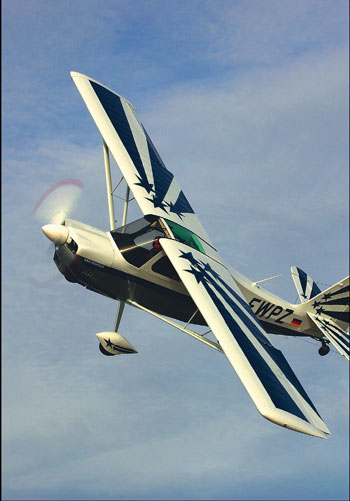
IN THE Blue corner we have the high-wing with the traditional fore and aft seating position, the rugged Super Decathlon aircraft out of the American Champion stable.

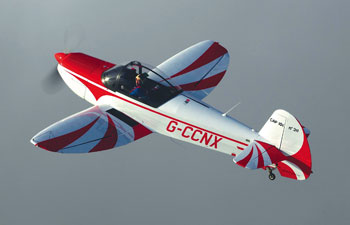
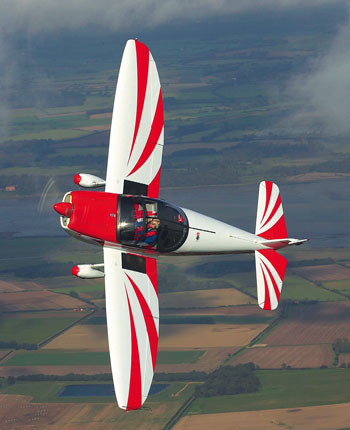
In the Red corner is the CAP 10C. With its beefed-up wing, side-by-side seating, low wing and wonderful looks it's a tough opponent putting up a real fight. Both are powered by a 180hp fuel-injected Lycoming IO-360 engine.

Our judges are LOOP's aerobatic 'Daddy', Alan Cassidy who should need no introduction to LOOP readers. He's joined ringside by Jim Lawrence, a LOOP reader who will be buying one of these aircraft at the end of the test. The man who's putting his money where his mouth is.

We were joined at the test by Mark Waite from Blue Yonder who distributes the American Champion range of aircraft and CAP 10C owner and LOOP writer, Phil O'Donaghue who would be demonstrating the aircraft and flying them for the photo shoot.

With two aircraft aimed at the same market niche, it was always going to be a close-fought fight and it's how it turned out.


ASSESSING FOR AEROS
AEROBATIC performance is a combination of several parameters. The power-to-weight ratio, all important when assessing a car's performance, matters in aeroplanes, too, but it is not the only thing. There is drag co-efficient to think of and certainly roll rate.

Handling qualities are also defined by centre-of gravity (CG) position, not only relative to wing lift but also relative to fuselage lift when generating side force to turn flat or to fly knife-edge.

Stick force for full control deflection within the permitted speed range may well be a consideration if you want to fly the aeroplane a lot without getting too tired, too soon (Yak drivers will know what I mean).


Power-to-Weight
These two aircraft boast the same 180hp fuel-injected Lycoming engine. The Decathlon weighs in at 1340lb empty while the CAP 10C is 1237lb. So the CAP has the edge? Perhaps, perhaps not. Power is not thrust. The engine provides the power, the propeller the thrust, and the Decathlon has a constant-speed prop while the CAP mounts a fixed-pitch screw.

On takeoff, the CAP engine is limited by the prop to about 2350rpm. So it's not producing usable 180hp at very low speed. The constant-speed prop allows the Decathlon engine to turn at maximum 2700rpm on takeoff, so acceleration is quicker and the take-off run shorter, despite the extra weight.

Drag Coefficient
To compare the relative drag of the two aircraft, I set out to determine the maximum level speed at roughly the same thrust. As the CAP has the fixed prop and must be guarded from over-speeding, I chose 2600rpm and full throttle to get a baseline level speed for the Decathlon.

It was 145mph. We had two people on board and a bit less than half fuel.

To compare the CAP to this baseline I used the same rpm. Again we were two people and the fuel states were comparable. The CAP was about 10% faster.

A good way to compare the combined effects of thrust, weight and drag between aircraft is to check their vertical penetration. I dived the Decathlon to 180mph (no propeller over-speed worries) and made a 4g pull to vertical from 3000 feet. The stall turn topped out 1000 feet higher. I did the same, or very similar, with the CAP-10 and gained slightly more height. Perhaps 1100 feet. Again, 10% up for the CAP.

More things than simply power-weight are combining here, but the overall result is a slight benefit to the French design, primarily because of its reduced weight and drag. The constant speed prop on the Decathlon goes some way to overcoming its weight and drag, but not all the way.

Rolling with Ailerons
In any assessment of aerobatic performance, rolling is of equal importance to thrust, weight and drag. I am talking here about rolling with ailerons. Rudder rolls come later in my appreciation.

The Decathlon came with the optional aileron 'spades' fitted. These flat plates are mounted on short arms below and forward of the aileron hinge line and balance the aileron aerodynamically. That is to say that they reduce the aileron control force and make it quite easy to apply full aileron at speed where this is permitted.

Rolling the Decathlon at 140mph, close to its maximum level speed, the ailerons are very effective. A complete level roll takes less than two seconds to complete using full aileron deflection. The ailerons create quite a bit of adverse yaw, however, and the feet have to dance a bit to keep everything going straight: left, right, more right, left, so to speak. Not anything you would ever hear a drill sergeant shout.

This need for proper rudder inputs is something to applaud in an entry-level aerobatic trainer. It really shows the student the practical manifestation of the theoretical and demands proper adaptation of the feet. This aspect is lost somewhat in aircraft of notably higher roll performance, such as an Extra 200 or a Sukhoi 29. The full-span ailerons give massive roll rates and this exposes the student to rudder correction for mere fractions of time. Teaching and learning are easier and better in a more demanding type like this.

The CAP 10C differs from its 10B predecessor in two principal ways. The wooden wing spar is carbon-reinforced for extra strength, while the aileron profile, hinge-line and balancing all appear slightly different. These modifications have made a big improvement and the 10C now rolls very much like a two-seat Pitts: a full roll in barely more than a second at 140 knots.

Rudder is still important for keeping heading, but the inputs must be quicker and a little smaller than in the Decathlon. To teach accurate rolling with this class of wing it is essential to use less than maximum available roll rate.

Rolling at Lower Speeds
The larger the percentage of the wing area occupied by the ailerons, the better the aircraft will maintain its roll acceleration and roll rate at lower speeds.

As the aircraft under consideration have similar vertical penetration, it seemed sensible to try some rolling in the vertical to see how roll rate is affected by reducing airspeed. This turned out to be the situation that showed up a significant difference between the two types.
I repeated the vertical climb test, but this time with rolling superimposed. In each case I pulled up from about 180mph and set about rolling pretty much straight away.

The Decathlon was relatively slow, as expected, but it made a quarter roll well enough. On my second attempt I went for a half, but the roll rate slowed so much as the vertical speed dropped off that I could barely manage the 180 degrees before having to start back down again.

In the CAP 10C I was able to fly a vertical half roll and still have time to spare before starting a stall turn. I don't think 3/4 with a clear line after would be out of the question, given a slightly brisker pull-up.

I then tried another exercise; a regular loop but with an aileron roll superimposed in the top 90° of the arc. This is a fairly common Intermediate competition figure. The CAP flew this with a perfectly acceptable rate of roll, while the Decathlon struggled to get round at the low speed. It would certainly take a lot more practice to make a good job of this, and I think that the pendulum-stability of the high-wing configuration is also making this kind of thing a little harder than with the low-wing design.

Flicks and Spins
Both aircraft are cleared for flick rolling at speeds of 90mph or so, and both perform adequately. The Decathlon requires more effort with the elevator, due to its more forward CG, but drops a wing well once the right pitch change is there. During the flick, both respond well to unloading. The CAP, however, has a habit of getting rather flat after about 3/4 of a turn when flicking left. It needs application of full left aileron with the unloading to stop the roll rate reducing unacceptably. To the right, the CAP stayed more axial, as should be expected, and aileron was not necessary to keep it going steadily.

An avalanche in the CAP, using right rudder, went well and is certainly easier than would be the case with left foot.
The most memorable thing about the Decathlon's flick is the roll momentum generated. The wing of the Decathlon is much bigger than on the CAP: 169 compared with 116 sq ft. In addition, the Decathlon wing holds the fuel, whereas this is in the fuselage of the CAP.

Consequently the Decathlon wing, once the rotation starts, wants to keep going much more decisively. Early action must be taken to stop the flick roll, especially when rotating left and full forward stick is needed to make the stop precise. The flick in the CAP stops quicker and more easily. It is therefore more responsive and somewhat easier to get right during repetitive training.

Both aircraft spin and recover quickly in a conventional manner, the main difference being the amount of aft stick required to bring the wing to the stall. In the CAP, the stall occurs with maybe an inch and a half of rear stick travel still left, while in the Decathlon the stick has to be fully back to reach the stall. Flown solo with the lone occupant in the front seat, the CG would be even further forward and clean spin entry from the stall would probably be enhanced with a little power to make the elevator more effective in gaining high alpha.

Neither aeroplane displays any strange stalling or spinning behaviour. Both recover quickly and easily, as their rudders are large and have good air flow. Slightly botched recoveries do not lead to abnormal situations. Both are excellent in this area and will lead to the student quickly gaining confidence in their ability to start and stop spins.


General Handling
Both aircraft are delightful in general handling, have good forward visibility for taxying or landing. As taildraggers go, neither is difficult to land or take off, although the CAP has a little more tendency to weathercock in a strong wind.
The Decathlon has very docile ground handling, thanks to its wide track and lengthy wheelbase, and is a close rival with the Yak-55 for the title of best kiddie-car for tailwheel landings.

Conclusion
Both aircraft are excellent entry-level aerobatic trainers. They have similar strength, performance and cross-country capabilities. In purely aerobatic terms, you will be able to go further down the path of increasing repertoire in the CAP, which is a capable intermediate level competition machine.

The Decathlon pilot would find Intermediate rather more taxing and would need to work his aeroplane much harder and closer to its limits. He would, however, find rolling turns easier than the CAP pilot.


I have to admit, though, that when choosing between these two, the different seating arrangements are much more likely to be significant than the aerobatic differences.

THE BUYER
JIM Lawrence gained his PPL 18 months ago and since then has been flying a Robin DR400. He's also completed his AOPA Aerobatics certificate with Phil O'Donaghue in the CAP 10C so he's very aware of that aircraft.

Before the test he had never flown the Super Decathlon so it was clear that he needed some flying time in it to get an idea of what it could do in the hands of an expert - Mark Waite. The photoshoot gave him that first opportunity. After an hour and a half of aerobatics and close formation it's safe to say that Jim found out!

Jim's smile told everyone what they needed to know. He loved it, but he needed to fly the aircraft himself so it was off for a flight away from the cameras and on his return I grabbed him to get the verdict.

Sam| So Jim, what did you think of the Decathlon?
Jim| I loved it. Mark really put it through it's paces! The CAP 10C feels faster and more nimble though. The price is a big factor (the CAP works out around £35,000 more expensive with comparable equipment) and it's a really tough decision.
I want an aircraft for touring and aeros and I like the side-by-side seating which offers more 'sociability', but the Super Decathlon has a much better view out and for touring I like that.
On the aerobatic side I'd take the CAP 10C. I prefer the sharpness in the roll but to be honest, I'm not going to be competing at aerobatics that often.
 
Sam|  How about other areas of handling?
Jim| Well, I landed the Decathlon with no help from Mark and it was a cinch. It really is a simple aircraft to land and I think this is a big plus point. No flaps to think about and she just sat down really nicely.
Everything was quite easy in the aircraft and this is a plus point as well. I haven't got lots of experience and the Super Decathlon is certainly the easier of the two - even though I have 12 hours in the CAP 10C.

Sam|  Does it come down to the old high wing/low wing thing?
Jim| Not for me. The benefits of the high wing are the views it affords, as does sitting in the middle of the aircraft. I've got a young son though and I think I'd prefer him to sit next to me rather than behind me where I can't see what he's doing! The side-by-side issue is more important for me than high or low wing.

Sam|  How about the sort of flying you want to do. Do you want to get in and out of small strips? (The Decathlon's landing gear is more rugged than the CAP's).
Jim| I do and the Super Decathlon is definitely the better aircraft at this. A shorter takeoff and landing roll plus it's easier to land. If it was just on this I'd go for the Decathlon. (The CAP needs almost double the landing distance).

Sam|  So does it just come down to price?
Jim| Yes and no. I don't have unlimited funds. The Decathlon is definitely the better value at the moment with the weak dollar. It's a big saving.

At this point Jim was about to give his decision but I stopped him! These things are better left overnight and I wanted him to sleep on it though I could sense that the CAP was still high in his affections. Would a night's kip sway him?

I was too late. The next day Jim had already called CAP's UK distributor, Bob Cole, to talk to him about a secondhand, low-hour CAP 10C he has for sale.  I'd told him about as we were leaving Old Buckenham.
So what made his mind up?

It was the side-by-side seating. I want to sit next to someone when we're touring and especially with my young son. Plus the CAP 10C that Bob has is secondhand and it brings the price difference down (Bob's asking £110K plus VAT for an almost new CAP 10C with just 70 hours) which makes it just 5K more expensive than the Decathlon when you compare the same level of equipment.

So there we have it. Jim has gone for a low-hour secondhand CAP 10C.
Having gone through all this and organising the flight test I'd like to offer a third opinion.
On the aeros front it's the CAP. I preferred aeros in the CAP 10C but the Decathlon is no slouch! I flew the beginners sequence in it and thought that it would make a great aircraft for a club and for taking you up to intermediate level.

On the touring you go further and faster in the CAP with more luggage weight. However the luggage area on the Super Decathlon is more useful and how far do you want to go? Touring isn't meant to be an endurance test. It's all down to bladder time anyway! For me it's about taking in the view and taking your time.

The Super Decathlon represents one of aviation's true bargains and it's this that sways it for me. A brand spanking new aircraft with all the basic equipment for $141,000 (that's £75,000).  I might be going 100nm less and 12kt slower in the cruise but I can live with that. You can do a lot of flying with the money you save on purchase price between the CAP 10C and the Super Decathlon!


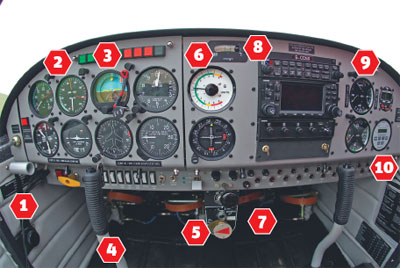
CAP 10C
1.
Throttle.
2. Flight Instruments.
3. Attitude Indicator (with cage for aeros).
4. Control Stick.
5. Fuel tank tap.
6. G meter.
7. Rudder pedals with top straps.
8. Navcomms stack including Garmin 430.
9. Engine Instruments.
10. Timer and G recorder


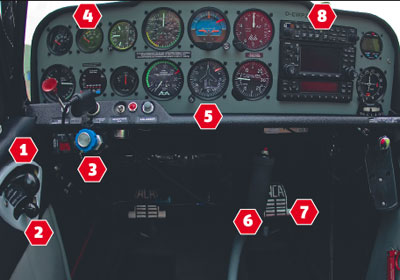
SUPER DECATHLON
1. Throttle.
2. Trim knob.
3. Prop.
4. Engine Instruments.
5. Flight Instruments.
6. Control Stick
7. Rudder pedals.
8. Navcomms inc Garmin 430 (not included in base price).                                          


SPECS

CAP 10C
PERFORMANCE
Vne 183kt
Cruise @ 75% 146kt
Stall (clean) 53kt
Rate of climb 1600 ft/min
Ceiling 16,400ft
Fuel burn
Range 521nm
Aerobatic load +6/-4 g

POWER
Engine 180hp Lycoming
Prop 2-blade fixed


DIMENSIONS
Length 7.16mt
Wingspan 8.06mt
Wing area 10.85sq mt
Seats 2
Mtow 830kg
Empty weight 540kg
Useful load 290kg
Fuel capacity

PRICE
180,000 euro

MANUFACTURER
Apex Aircraft
1, route de Troyes
21121 Darois
France
W: www.apex-aircraft.com

UK DISTRIBUTOR
Cole Aviation
Spiltsteads Farm
Stream Lane
Sedlescombe
East Sussex TN33 0PB
T: 01424 870899

SUPER DECATHLON
PERFORMANCE
Vne 174kt
Cruise @ 75% 128kt
Stall (clean) 46kt
Rate of climb  1280ft/min
Takeoff roll 151mt
Landing roll 130mt
Ceiling 15,800ft
Fuel burn @ 75% 36 lt/hr
Range 434nm
Aerobatic limits +6/-5 g

POWER
Engine 180hp Lycoming
Prop Hartzell, 2-blade, constant-speed

DIMENSIONS
Length 6.9mt
Wingspan 2.3mt
Wing area 15.71sq mt
Seats 2, tandem
Mtow 816kg
Empty weight 608kg
Useful load 208kg
Fuel capacity 151 litres

PRICE
Base price $137,900

MANUFACTURER
American Champion Aircraft Corp
PO Box 37
32032 Washington Ave
Rochester, WI  53167
W: www.amerchampionaircraft.com

UK DISTRIBUTOR
Blue Yonder Aviation
Hanger 3
Earls Colne Airfield
Colchester, Essex CO6 2NR
T: 01787 224290
W: www.blueyonderaviation.co.uk
************************************
WORDS Alan Cassidy and Sam Spurdens PHOTOS Dave Spurdens


News calendar
<October 2007>
SunMonTueWedThuFriSat
123456
78910111213
14151617181920
21222324252627
28293031
Partners
Aerobatics
Aeros with Alan – Opening your Personal Flight Envelope
Learning aerobatics is a great motivational tool for improving your flying.
Features
Learn to fly
So you want to learn to fly? What do you do? Take a look at our guide to get you airborne.
Find a school/club

Want to learn how to fly?
Click on the map above to find your nearest flight training school.

News
Maiden flight for new Italian light twin powered by RotaxA BRAND new light twin aircraft being developed by Italian manufa ... more
CESSNA has confirmed it is negotiating to buy Columbia Aircraft. Columbia ran into financial difficulties and filed for Ch ... more
A SOLAR-powered aircraft has smashed the official world record for the longest-duration unmanned flight.The 18mt wingspan Ze ... more
All material © LOOP Publishing (UK) Ltd 2005-2007